Francais

 Cart
 Quote
Vegetable growing and packaging: which containers and crates should be used for harvesting, sorting and dispatch?
From the field to the market or supermarket, market-grown fruit and vegetables go through a series of stages involving handling, sorting, washing and dispatch. At each stage, choosing the right container is crucial: to preserve product quality, minimise losses (breakage, bruising, contamination), optimise logistics and comply with health and trade standards. This guide provides an overview of the solutions available for each phase of the market garden supply chain, from the field to dispatch.
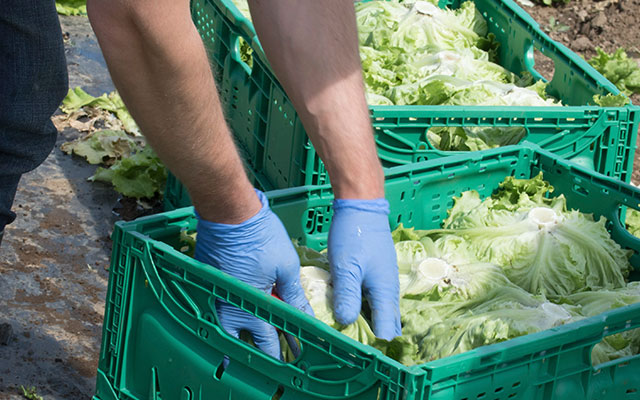
This choice helps preserve product quality, limit losses (breakage, bruising, contamination), optimize logistics, and comply with health and commercial standards. This guide reviews the solutions available for each phase of the market gardening sector, from the field to shipping.
Specific constraints of the market gardening sector
The market gardening sector imposes particularly strict requirements on containers, which must simultaneously:
- Withstand outdoor conditions: Solar UV rays, humidity, dirt, temperature extremes (frost, summer heat).
- Be food contact safe: Materials certified for fresh produce.
- Facilitate handling: Reduced empty weight and ergonomic grip.
- Withstand washing: Resistance to pressurized water and detergents.
- Nest or stack: Optimization of storage and empty return transport.
Harvesting: priority on lightness and durability
HDPE harvesting crates
High-density polyethylene (HDPE) is the dominant material for vegetable harvesting crates. Lightweight (a crate with a 15 kg capacity typically weighs 800 g to 1.2 kg), UV-resistant, waterproof, and certified for food contact, it offers the best combination of performance for manual harvesting.
Its smooth surface makes cleaning easy. The most common sizes range from 15 to 25 liters, with perforated walls to accelerate the cooling and drying of harvested products.
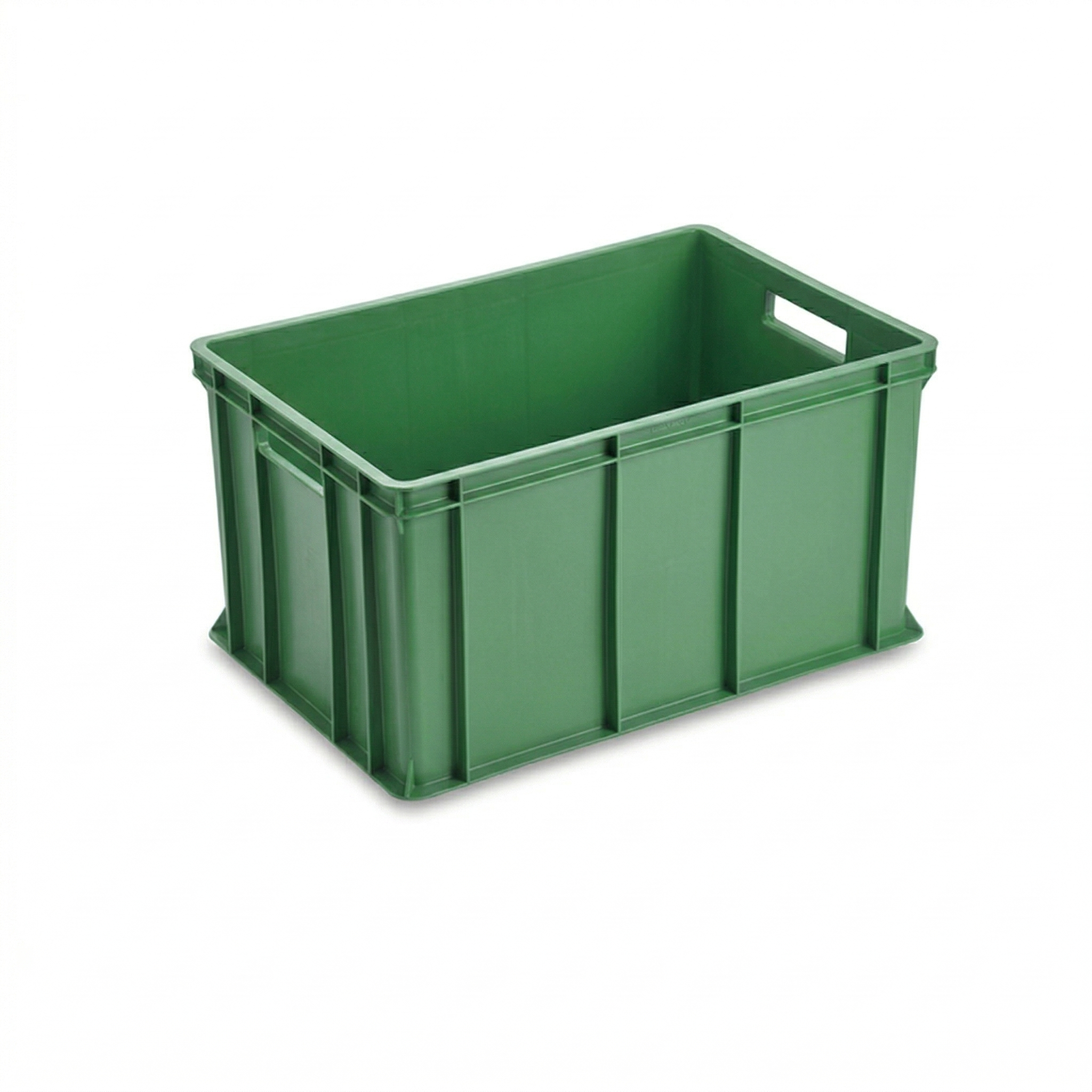 Perforated HDPE harvesting crate
Pallet boxes and big bags for large volumes
For large-volume crops (potatoes, onions, loose carrots), plastic pallet boxes (also known as bins or palox) ranging from 600 to 1,500 liters allow for direct mechanical harvesting with forklift lifting.
Made of HDPE or PP, they withstand outdoor conditions and their slatted bottoms promote drainage. Some models are collapsible to facilitate empty return transport.
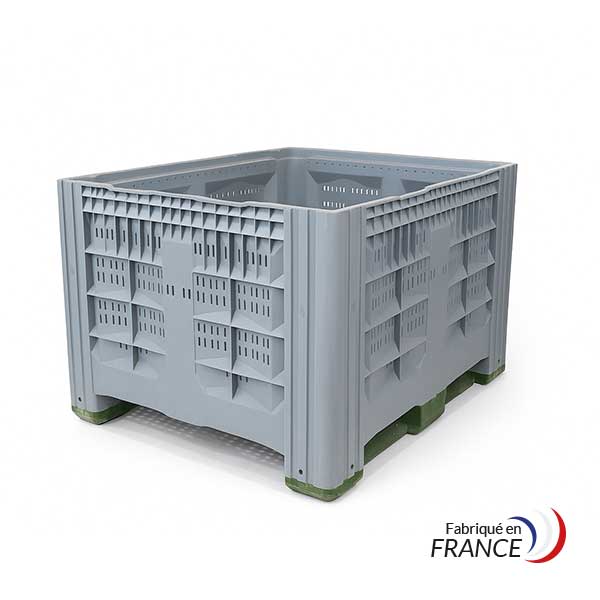 Large volume pallet box (Palox)
| Criterion | What to check |
|---|---|
| Food certification | Glass/fork logo marking, BPA-free |
| UV resistance | UV stabilizer integrated into the plastic mass |
| Empty weight | < 1.2 kg for manual 15 L crates |
| Nestability | Nested/unfolded ratio ≥ 2.5 to limit empty volume |
| Load resistance | Stacked static load ≥ 150 kg |
| Crate-washer compatibility | Hot water resistance up to 80°C |
| Frost resistance | Mechanical strength down to at least –20°C |
Sorting and washing: open and draining containers
After harvesting, the containers used for sorting and washing must allow for easy handling, effective drainage, and resistance to water jets.
Perforated sorting bins
Sorting bins with perforated walls and bases (integrated plastic grid) allow for the immediate drainage of washing water and dirt debris. They are available in standardized sizes compatible with sorting conveyor belts and grading lines. Polypropylene (PP) is preferred because it better withstands the high temperatures of washing water.
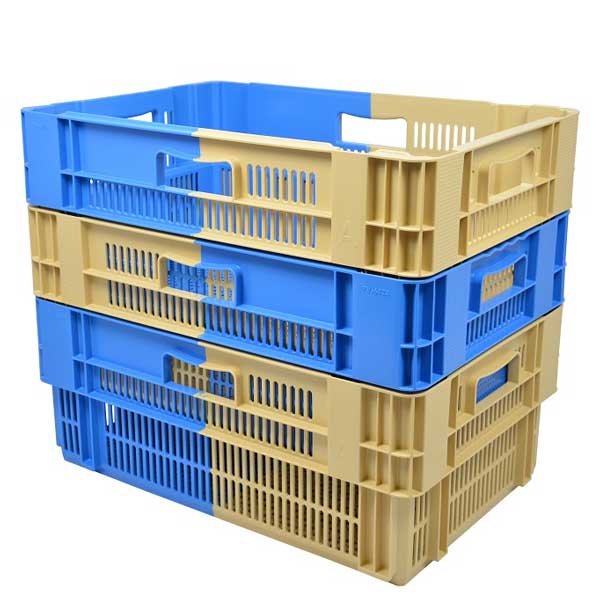 Perforated bin for line sorting
Washing crates
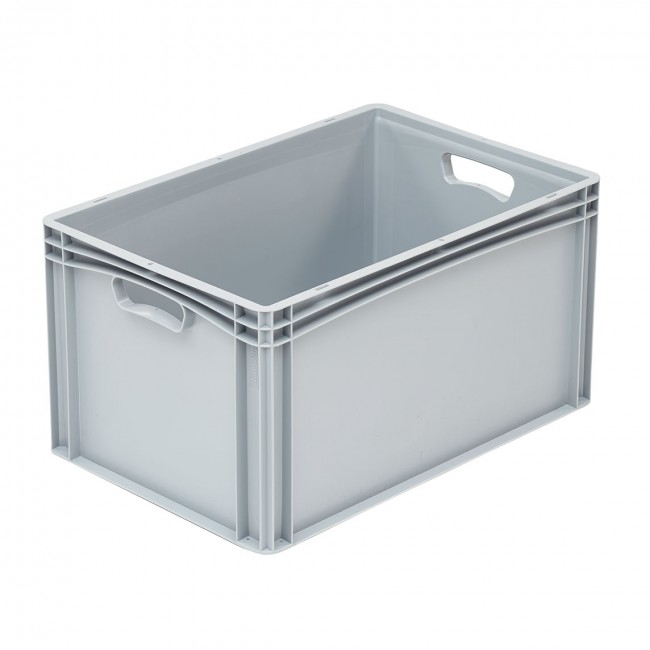
For species requiring immersion washing (radishes, lamb's lettuce, parsley), deep PP or HDPE bins of 50 to 200 liters are used as soaking bins. Their smooth, non-porous surface facilitates decontamination between batches and guarantees perfect hygiene.
 Large volume solid bin for soaking
Packaging and shipping: standardization and traceability
The packaging stage is where container standardization is most important, as it determines compatibility with pallet racks, loading docks, and buyer expectations.
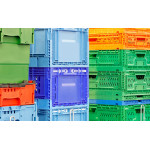
Standardized shipping crates
Mass retail and wholesale markets require crate formats compatible with EUR pallets (800×1200 mm), primarily the 600×400 mm and 400×300 mm modules.
- Solid crates: For products sensitive to desiccation.
- Ventilated crates: To slow down fermentation (cauliflowers).
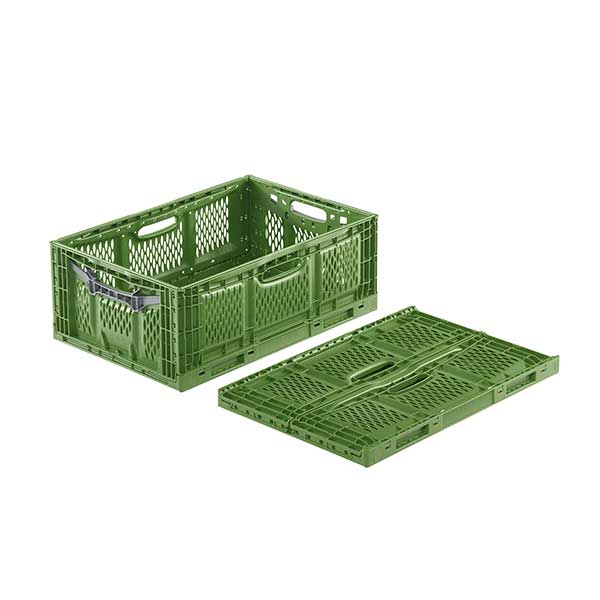
- Foldable crates: Reduce empty volume by 80% during return transport.
 Euro Norm foldable crates 600x400
Traceability and choice of materials
European regulations require complete traceability. Crates must allow for the application of traceability labels (batch, harvest date). In terms of materials, while wood is still used for its artisanal image, food-grade plastic has established itself as the professional standard: washable, reusable, with no risk of splinters or contamination.
Managing the crate fleet: a major logistical challenge
For professional market gardeners, managing the fleet of reusable crates is essential:
- Number and identify all crates to ensure traceability.
- Set up a deposit system with buyers to encourage returns.
- Schedule systematic cleaning and disinfection before each reuse.
- Remove cracked crates from circulation (risk of plastic splinters on products).
- Store empty crates away from direct UV rays and rodents.
Equip your farm
Multiroir offers a complete range of food crates and bins for the market gardening sector: harvesting, sorting, packaging, and shipping.
Check out our market gardening category