Francais
 Cart
Cart Quote
QuoteEverything You Need to Know About Plastic Recycling in Logistics: Key Figures, Challenges, and Solutions
An essential material in industry and logistics, plastic is at a crossroads today. While its usage time may be short for disposable packaging, its environmental impact is long-lasting. Faced with global production that has doubled over the past 20 years, recycling is no longer an option; it is an economic and ecological imperative. For businesses, understanding the life cycle of plastic has become essential to reduce their carbon footprint and anticipate regulations. What do the numbers say? How is industrial plastic recycled? What are the sustainable alternatives offered by Multiroir?
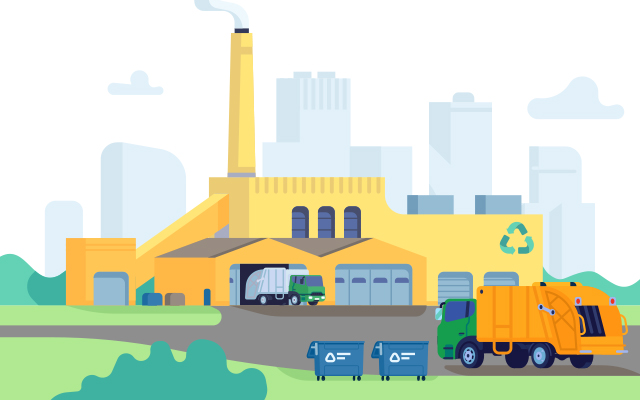
The current situation in numbers (2024-2025)
- 9%: The share of recycled plastic worldwide (Source: OECD). The room for improvement is immense.
- 24.5%: The recycling rate for plastic packaging in France, still far from the 50% target set by the EU for 2025 (Source: Citeo / Eurostat).
- 1.1 million tons: The volume of plastic packaging placed on the market each year in France.
- 100%: The target set by the AGEC Law (Anti-Waste for a Circular Economy) to move towards the end of single-use plastics by 2040.
Why is plastic recycling a major challenge?
In France, plastic consumption remains high. The conclusion is clear: we consume resources faster than they regenerate.
Petroleum-based (virgin) plastic emits CO2 during extraction and manufacturing. However, recycling it changes the energy equation.
According to the SRP (Syndicate of Plastic Material Regenerators), using one ton of recycled plastic material saves:
- Approximately 830 liters of oil.
- Up to 2.5 tons of CO2 equivalent compared to virgin resin.
The goal is to transition from a linear model (extract > manufacture > discard) to a circular economy where a used bin becomes a raw material once again.
The life cycle: From your warehouse to the regeneration center
For a plastic packaging or bin to have a second life, it follows a strict 4-step process:
- Sorting at the source: This is the key step that takes place in your premises. The sorting action (dedicated dumpsters, compactors) determines the entire chain.
- Collection and industrial sorting: Waste is sent to centers where it is separated by resin type (PP, HDPE, PET...), then compacted into bales.
- Regeneration: The bales are washed, crushed, and transformed into granules or flakes (RRM - Recycled Raw Materials).
- Recovery: These granules become raw material for the industry again.
The 7 plastic families: Who is who?
Not all plastics are equal when it comes to recycling. Here are the main polymers used in logistics:

PET (Polyethylene Terephthalate)
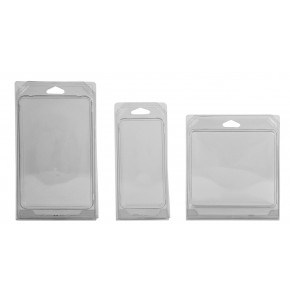
Transparent (bottles, blister packs). High recycling rate.

HDPE (High-Density Polyethylene)
Opaque and rigid (pallets, jerrycans). Very well recycled in France.

PVC (Polyvinyl Chloride)
Very rigid, used mainly for construction pipes and profiles.

LDPE (Low-Density Polyethylene)
Flexible material, used for stretch films and protective covers.

PP (Polypropylene)
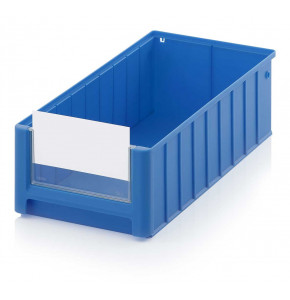
Resistant to shocks and chemical agents (Picking bins, Euro norm). Rapidly growing recycling sector.

PS (Polystyrene)
Ultra-lightweight material, widely used for cushioning and thermal protection.
Decoding the logos: No more mistakes
Symbols are multiplying on your packaging. Here are the ones that truly matter for your waste management:

The Triman
Mandatory since 2015, it clearly indicates that the product must be sorted to enter a recycling stream.
The Möbius Loop
Alone: The product is technically recyclable.
With a % in the center: Indicates the exact share of recycled material included.

The Green Dot
Warning, this logo does not mean the product is recyclable. The manufacturer simply pays an eco-contribution. Being phased out.
The 5Rs method: Beyond recycling
Recycling is crucial, but according to ADEME (French Agency for Ecological Transition), the best waste is the one we don't produce. For green logistics, Multiroir encourages you to adopt the 5Rs hierarchy:
- REFUSE: Unnecessary overpackaging.
- REDUCE: Empty space in parcels.
- REUSE: This is our core business.
Key statistic: A reusable plastic tote bin performs an average of more than 100 rotations before being recycled, whereas a cardboard box is only used once. The life cycle carbon footprint is highly favorable to durable plastic bins. - RECYCLE: At the end of its life, ensure your equipment enters an appropriate recycling stream.
- ROT (Compost): For compostable bioplastics.
The Multiroir Commitment
Aware of these challenges, we continuously develop our ranges to reduce the environmental impact of your logistics:
- Eco-Responsible Ranges: Bins made from regenerated (recycled) material.
- Durability: Our products are designed for intensive and long-term use (Reuse), the antithesis of "disposable".