Francais

 Cart
 Quote
Reusable vs. Single-Use Containers in Industry: What Are the Economic and Environmental Implications?
The choice between reusable containers and single-use packaging has become a strategic issue for industrial companies. Faced with the combined pressure of environmental regulations, CSR commitments, and rising raw material costs, the time has come to reevaluate logistics practices.
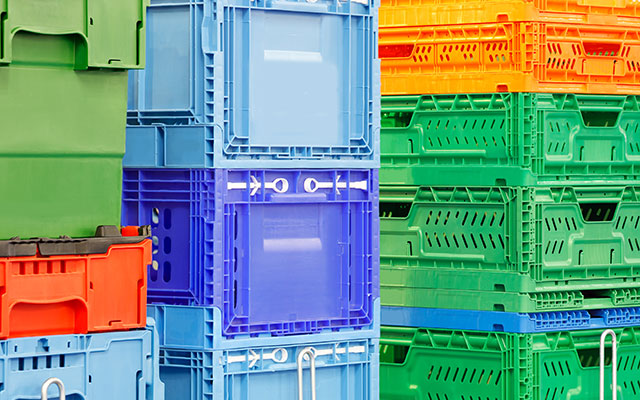
However, the answer is not as straightforward as it may seem: while the environmental benefits of reusable packaging are real, its economic performance depends on numerous variables specific to each company. This guide provides the key elements to help you make an informed decision.
The regulatory landscape: growing pressure on single-use packaging
European and French regulations are clearly pushing toward the reduction of industrial single-use packaging. Several key regulations are shaping this transition:
- The European PPWR Directive (Packaging and Packaging Waste Regulation, 2024): it sets binding targets for packaging reduction, minimum recycled content, and eco-design requirements for all packaging placed on the European market, including industrial and transport packaging.
- The AGEC Law (Anti-Waste for a Circular Economy, 2020): it introduces reuse and recyclability requirements for packaging, with progressive reduction targets through to 2040.
- The CSRD Directive: it requires large companies to report non-financial data, including packaging policies and waste reduction efforts.
These regulations create a framework that encourages the entire B2B supply chain to adopt reuse strategies and reduce waste at source.
Economic analysis: total cost of ownership (TCO)
The most common mistake when comparing reusable versus single-use packaging is focusing solely on the unit purchase price. A reusable container always costs more upfront — sometimes 5 to 10 times more — but its actual cost must be evaluated over its entire service life.
What makes up the TCO?
- Initial purchase price.
- Cleaning and sanitization costs (water, energy).
- Reverse logistics (collection, transportation).
- Loss and breakage management (attrition).
- Traceability system costs.
- Purchase cost (renewed with every use).
- Disposal or recycling costs.
- Cost of non-quality (waste, rejects).
- Impact of the General Tax on Polluting Activities (TGAP).
| Parameter | Reusable | Single-use |
|---|---|---|
| Purchase price | High (×5 to ×10) | Low |
| Service life | 5 to 15 years (hundreds of cycles) | 1 use |
| Cost per cycle (amortized) | Very low after amortization | Constant |
| Reverse logistics | Required (cost + organization) | None |
| End-of-life disposal | Low (recyclable) | Recurring and high |
In practice, the break-even point for a reusable container generally ranges between 15 and 50 usage cycles. Beyond this threshold, reusable solutions are systematically less expensive to operate, sometimes by as much as 60% to 80%.
Environmental impact: life cycle assessment (LCA)
The environmental advantage of reusable packaging is real, but depends on the number of cycles completed, the cleaning method used, and return transport distances.
- Carbon footprint (CO₂ eq): reusable packaging becomes advantageous after only 3 to 10 cycles for most materials. A reusable HDPE container emits on average 4 to 8 times less CO₂ over its lifespan than an equivalent series of single-use containers.
- Water consumption: cleaning requires water, but with industrial container washing systems (including integrated water recycling), the impact remains lower than the continuous manufacturing of new packaging.
- Plastic waste: reuse ranks higher than recycling in the European waste hierarchy.
Limitations of the environmental advantage
Single-use packaging may sometimes be environmentally preferable in specific cases: very long return distances (>500 km), very low usage frequency, or cross-contamination risks requiring destruction (highly specific medical or chemical environments).
Which sectors benefit most from switching to reusable packaging?
| Sector | Reusable potential | Main container types concerned |
|---|---|---|
| Food industry (short supply chains) | Very high | Plastic crates, harvest bins, pallet boxes |
| Retail & Logistics | High | Roll containers, picking bins |
| Manufacturing industry | High | Parts transport bins, shuttle containers |
| Chemicals / Laboratory | Moderate | Spill containment trays, specific containers |
| Pharmaceutical / Medical | Low to moderate | Certified sterile transport bins |
Key success factors for switching to reusable packaging
A management and traceability system
The main reason reusable systems fail is container loss. Without a traceability system (barcodes, RFID, financial deposit schemes), attrition rates can reach 20% to 30% per year. A rigorous management system is the minimum requirement.
A structured reverse logistics process
Reusable packaging only makes sense if containers actually come back. This requires formal agreements with customers regarding return procedures (frequency, transport responsibility).
Suitable washing equipment
Cleaning reusable containers should be industrialized once volumes exceed a few dozen bins per week. Industrial bin and crate washers enable effective cleaning at controlled costs, with short cycles (3 to 5 minutes) and optimized water consumption.
Material selection adapted for durability
HDPE and Polypropylene (PP) provide the best combination of impact resistance, heat resistance (washing), and UV resistance for intensive industrial use.
Support your transition with Multiroir
The balance clearly tips in favor of reusable solutions in most industrial contexts. A decision that pays off over time — both financially and in terms of CSR performance.
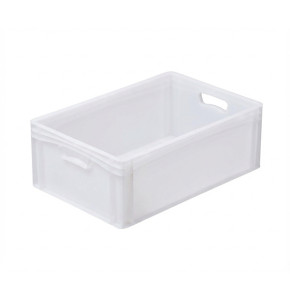
Discover our range of reusable HDPE & PP plastic bins