Francais

 Cart
 Quote
How to choose the right plastic storage container?
Storage, organization, transport, order preparation... The plastic bin is the cornerstone of any highly efficient logistics chain. However, faced with the multitude of models, dimensions, and materials available, how do you identify the container perfectly suited to your professional requirements?
At Multiroir, we know that a poorly chosen container can hinder your productivity or damage your goods. Weight, volume, temperature, sanitary standards: this guide decodes all the criteria to consider to successfully equip your premises.
Analyzing your needs: Preliminary questions
Before browsing catalogs, the first step is to assess the environment in which the bin will be used:
- What will I store? (Heavy parts, food products, fragile electronic components...)
- Where will the bin be used? (Cold room, production line, dusty warehouse, automated conveyor...)
- How will it be handled? (Manually, on a pallet, stacked several meters high...)
The essential standard: The Euro-norm bin
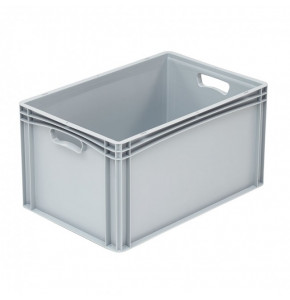
If you need to palletize or automate your flows, the Euro-norm plastic bin is the absolute reference. Its external dimensions (e.g., 600x400 mm, 400x300 mm) are exact sub-multiples of the Euro pallet (1200x800 mm). This ensures perfect palletization, without overhang or wasted space.
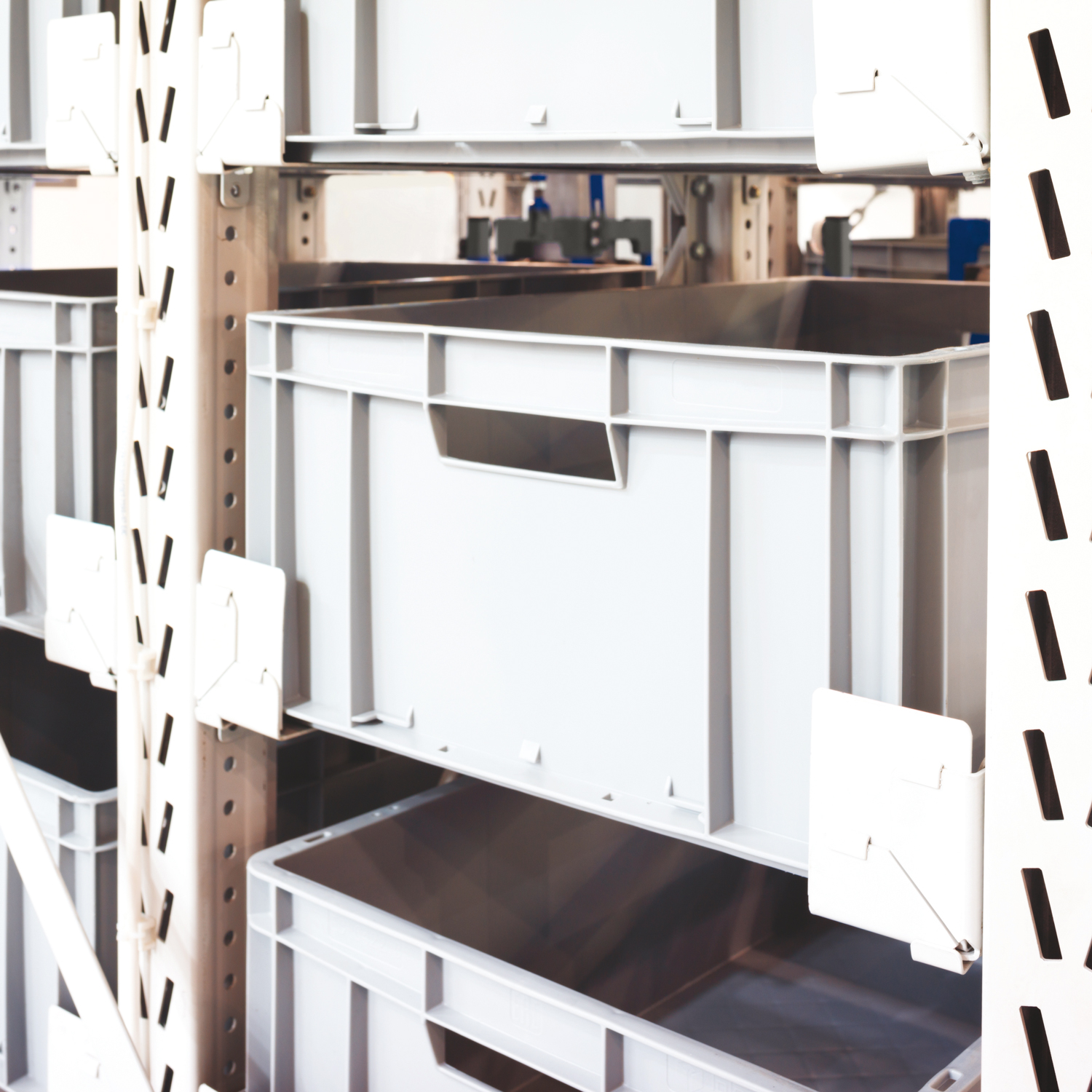
The 3 criteria to configure your Euro bin:
- A. Walls and bottoms (solid or perforated): A solid bottom is ideal for sealing and liquid retention. Perforated walls are essential for ventilation (agriculture) or to prevent water accumulation. A reinforced (ribbed) bottom is recommended for heavy loads on conveyors.
- B. The choice of handles: Open (holes) for an ergonomic grip when carrying heavy loads; or closed (shell) to utilize 100% of the internal volume and block dust.
- C. Pay attention to usable dimensions! "Euro-norm" dimensions (e.g., 600x400 mm) are external. Always check the internal dimensions to ensure your products will fit.
Understanding the materials: PP or HDPE?
The choice of plastic is not just an aesthetic detail; it determines your bin's resistance to its environment.
- Polypropylene (PP): Very impact-resistant, odorless, and resistant to chemical agents. However, it becomes more fragile in very low temperatures.
- High-Density Polyethylene (HDPE): The star of demanding environments. It perfectly resists impacts, acids, and extreme temperatures (-40°C to +90°C). The number one choice for the food industry and cold rooms.
At Multiroir, we offer 100% recycled ranges. It is a perfect ecological and economical solution for industry or general storage. However, for direct food contact or the medical field, virgin material remains mandatory.
A bin for every profession: Specificities
Beyond the classic Euro-norm, there are containers designed to address very specific professional challenges.
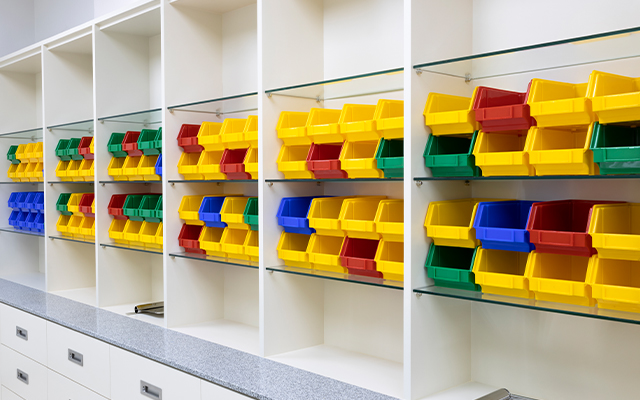
Workshop & Order Preparation
- Picking bins: Their front opening allows immediate visibility and access to contents, even when the bins are stacked.
- Essential for hardware, spare parts, or pharmaceuticals.
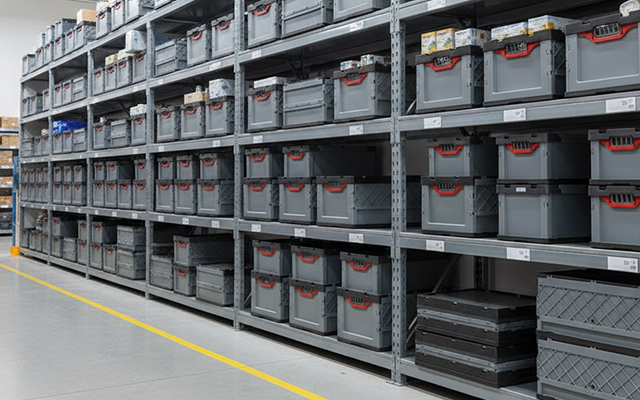
Space Optimization (Return Logistics)
- Foldable bins: Reduce volume by 80% when empty. Perfect for cutting transport costs.
- Nestable bins: They stack when full and nest inside each other when empty, thanks to their conical shape.
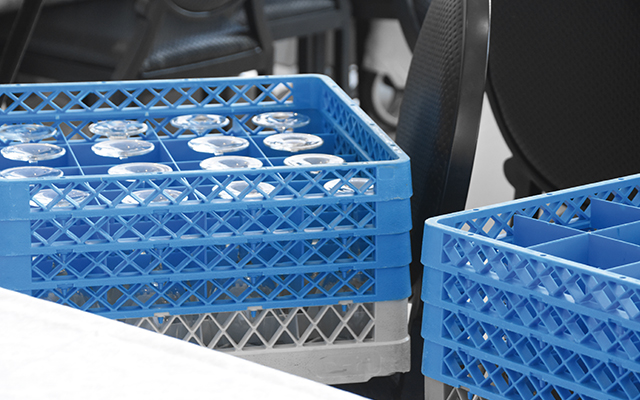
Food Industry & Hospitality (HoReCa)
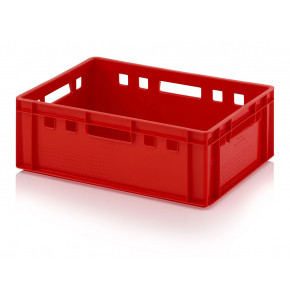
- Food bins: Made of virgin HDPE, smooth walls for easy cleaning to prevent bacterial growth (meat, dough).
- Washing racks: For glasses and plates, resistant to high temperatures and professional detergents.
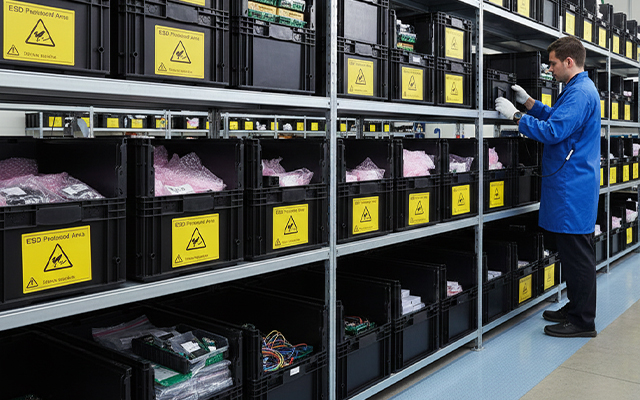
High-Tech & Automotive
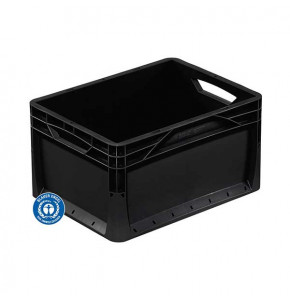
- Antistatic bins (ESD): Made of black conductive material, they dissipate static electricity to protect components.
- Automotive bins (Galia / VDA): Designed to meet the very strict specifications of automotive manufacturers.
Load glossary: Don't get confused!
Before confirming your purchase, always check the load capacities indicated on the product sheet:
- Static load: The maximum weight you can place inside the bin when it is resting on the ground.
- Dynamic load: The bin's resistance when it is in motion (on a conveyor or during transport).
- Stacking load: The maximum weight the bin "at the very bottom of the stack" can support on its rims without crushing or deforming. (e.g., a bin might hold 20kg inside, but withstand 300kg when stacked).