Francais

 Cart
 Quote
How will the new PPWR regulation transform your packaging?
The European Packaging and Packaging Waste Regulation, known by the acronym PPWR, has been applicable since August 12, 2026. As the first European text entirely dedicated to packaging, it sets binding targets for recyclability, recycled content, reuse, and waste reduction, with deadlines staggered up to 2040. Manufacturers, distributors, logisticians, e-tailers, and catering professionals are all affected.

PPWR at a Glance
Regulation (EU) 2025/40 was published in the Official Journal of the European Union on January 22, 2025, and entered into force on February 11, 2025. It replaces Directive 94/62/EC. Its major difference lies in its nature: a regulation applies directly in all 27 Member States, without the need for national transposition, which harmonizes the rules for all operators.
- All materials: plastic, cardboard, glass, metal, wood, textile...
- All players: manufacturers, importers, distributors, e-tailers, logisticians, catering...
- The entire chain: from packaging design to end-of-life.
Why This Regulation?
Packaging consumes significant resources: according to the General Directorate of Customs, 40% of plastics and 50% of paper used in Europe are intended for packaging, representing 36% of municipal solid waste. Furthermore, the European Commission noted a more than 20% increase in packaging waste over ten years, with a potential 19% increase by 2030 without new action. The PPWR addresses this observation and the fragmentation of national rules, in line with the Green Deal and the Circular Economy Action Plan.
Key PPWR Dates
| Deadline | What Applies |
|---|---|
| February 11, 2025 | Entry into force of the regulation |
| August 12, 2026 | General application: restriction of PFAS in food contact packaging, operator obligations (technical documentation, declaration of conformity) |
| February 12, 2028 | Catering: option to offer takeaway food and beverages in reusable packaging |
| From 2028 | Harmonized labeling for sorting rules (schedule depending on implementing acts) |
| 2029 | Digital traceability (QR code) for reusable packaging |
| January 1, 2030 | Minimum recyclability (Class C), recycled content in plastics, empty space limited to 50%, reuse targets, ban on certain single-use formats, 5% reduction in packaging waste per capita |
| 2035 | 10% reduction in packaging waste per capita (2018 baseline) |
| January 1, 2038 | Only Class A or B recyclability packaging remains authorized |
| 2040 | 15% reduction; increased recycled content; reuse raised to 70% for transport packaging |
What the PPWR Concretely Changes for Your Packaging
1. Mandatory Recyclability
Packaging will be graded from A to E according to its recyclability. From 2030, packaging that does not achieve at least Class C (over 70% recyclability) can no longer be placed on the market; from 2038, only classes A and B will be accepted. Manufacturers will have to document this performance in a technical file.
2. Minimum Recycled Content in Plastics
From 2030, plastic packaging will have to include a minimum percentage of recycled content, which varies depending on the use:
| Type of Plastic Packaging | 2030 | 2040 |
|---|---|---|
| Sensitive contact, PET | 30% | 50% |
| Sensitive contact, non-PET | 10% | 25% |
| Single-use beverage bottles | 30% | 65% |
| Other plastic packaging | 35% | 65% |
3. Reuse: A Major Shift for Transport Packaging
This is the most structuring aspect for logistics. Starting in 2030, a minimum share of the affected transport packaging (pallets, plastic boxes and bins, folding boxes, IBCs, drums...) must be reusable: 40% in 2030, then 70% in 2040, with cardboard being excluded. For grouped (secondary) packaging, the targets are 10% in 2030 and 25% in 2040. Exemptions exist for certain cases, to be verified according to your activity.
Reusing requires an organized system: collection, cleaning, inspection, traceability, and recirculation. It is best to start thinking about it now, as design offices and service providers will be in high demand approaching 2030.
4. Less Empty Space and Less Overpackaging
The empty space ratio will be limited to 50% for grouped, transport, and e-commerce packaging, subject to exemptions provided by the text. Cushioning materials (crumpled paper, air cushions, bubble wrap, foams...) are counted as empty space.
5. Restricted PFAS
Since August 12, 2026, food contact packaging can no longer contain PFAS beyond the set thresholds. Ask your suppliers for a certificate of conformity for your food packaging.
6. Labeling, Traceability, and Documentation
Harmonized marking of sorting rules and digital media (QR codes) will progressively accompany packaging. Manufacturers, importers, and distributors will, each at their level, have to establish or verify compliance documentation.
PPWR vs. Directive 94/62/EC: What Changes
| Criterion | Directive 94/62/EC | PPWR Regulation (EU) 2025/40 |
|---|---|---|
| Legal Nature | Directive, to be transposed in each Member State | Regulation, directly applicable in the 27 Member States |
| Recyclability | No quantified design requirement | Classes A to E; minimum C by 2030, A or B from 2038 |
| Recycled Material | No minimum for plastic packaging | Minimums starting in 2030 for plastic packaging |
| Reuse | Encouraged, without harmonized targets | Quantified targets for transport and grouped packaging |
| Substances | Limited framework | Stricter restrictions, including PFAS in food contact |
| Reduction | No quantified target per capita | −5% in 2030, −10% in 2035, −15% in 2040 |
Which Packaging to Choose to Anticipate?
The 2030 objectives favor durable containers, designed for numerous rotations, and recycled materials. At Multiroir, several product families align with this direction:
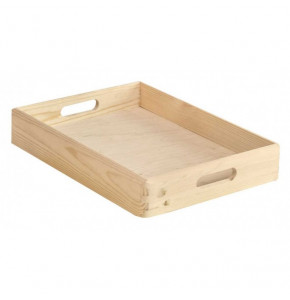
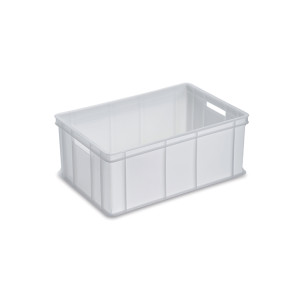
- Reusable bins and boxes: Euro-norm plastic boxes, distribution boxes, and folding boxes that limit space requirements on return trips.
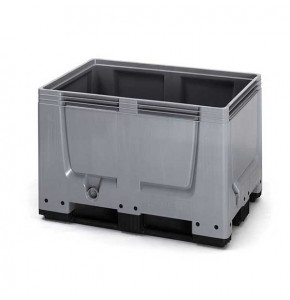
- Pallet boxes and pallets: Solid, perforated, folding pallet boxes or IBCs, and lightweight or heavy-duty plastic pallets.
- Recycled materials: Euro-norm boxes made of recycled material and the ECOLINE range, found in our eco-responsible collection.
These solutions do not eliminate the need to structure a reuse circuit (returns, cleaning, traceability), but they provide the material foundation. To validate the recycled material content or the documentation of a specific product, the Multiroir team is here to assist you.
Your 6-Step Action Plan
Inventory your packaging
List references, materials, weights, and volumes.
Classify each packaging
Determine if it is sales, grouped, or transport packaging.
Assess compliance metrics
Evaluate recyclability, the share of recycled material, and the presence of PFAS.
Request documentation
Ask your suppliers for technical documentation and declarations of conformity.
Plan the shift to reuse
Prepare the transition for your transport flows and return circuits.
Train and monitor
Train your teams and set up regulatory monitoring, in conjunction with the French EPR.
Frequently Asked Questions
Is the PPWR already applicable?
Yes, generally since August 12, 2026. Certain obligations, such as recyclability, recycled content, or reuse, will apply later, mostly starting in 2030.
Which materials are affected?
All of them: plastic, cardboard, glass, metal, wood, textile, and composite materials.
Is reusable packaging affected?
Yes, and they are at the heart of the framework: the regulation sets reuse targets and specific requirements (traceability, validation of the hygiene of reuse cycles).
What is the link with the professional packaging EPR?
The PPWR sets the European framework; the EPR, applicable in France as of January 1, 2027, finances the end-of-life of packaging and modulates costs according to their environmental qualities.
Do we have to change everything before 2030?
No, but the audit must begin now: non-recyclable packaging, those with low recycled material content, or single-use transport packaging are the ones to address as a priority.
Conclusion: Start Your Transition Today
The PPWR turns packaging into a genuine product compliance issue. Companies that inventory their packaging today and initiate the transition to reusable and recycled containers will avoid the rush in 2029.
To study your needs for bins, pallet boxes, or pallets...
Contact the Multiroir teamOr call us at +33 (0)1 45 10 15 20
Sources:
- Regulation (EU) 2025/40 – EUR-Lex
- General Directorate of Customs – Entry into force of the packaging regulation
- Recycleme – PPWR 2026: compliance and obligations
- Eurovetrocap – The PPWR regulation
- Greif – Understanding the PPWR regulation