Francais
 Cart
Cart Quote
QuoteThe wooden pallet box is the most widespread and economical solution. It is suitable for heavy loads, absorbs shocks, and can be repaired in case of partial breakage. Its main flaw: it is sensitive to moisture (risk of mold, deformation) and can harbor pests if stored in an unprotected outdoor environment. It is also subject to the ISPM 15 phytosanitary regulation for exports outside the European Union, which may require heat treatment.
Ideal for: construction, mechanics, heavy parts, short-circuit freight transport.How to choose your pallet box?
Posted by Christopher, on 05/05/2026
Do you store spare parts, bulk products, or heavy goods and are looking for the right container to transport, store, or ship them? The pallet box is often the answer — but you still need to choose the right model. An undersized box will deform upon the first loading. A material unsuited to the working environment will rust, mold, or crack. And a box that doesn't fold takes up as much space empty as it does full. In this guide, we review the five essential criteria for selecting your pallet box: material, payload, dimensions, structure (fixed or foldable), and the operating environment. At the end, a summary table will allow you to make a quick decision based on your sector.
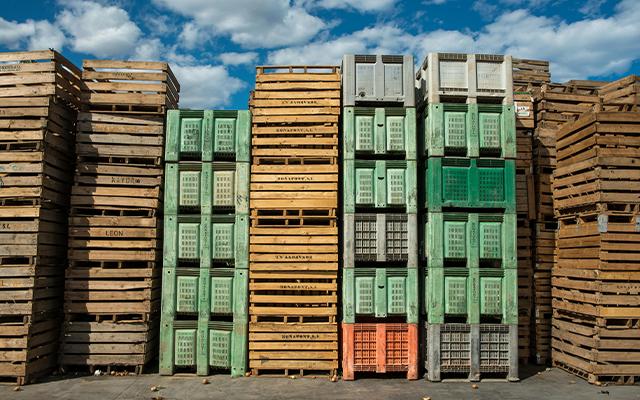
1. Material: wood, plastic, metal or wire mesh?
The material is the first filter to apply, as it determines the strength, hygiene, weight, and cost of the box.
Wood
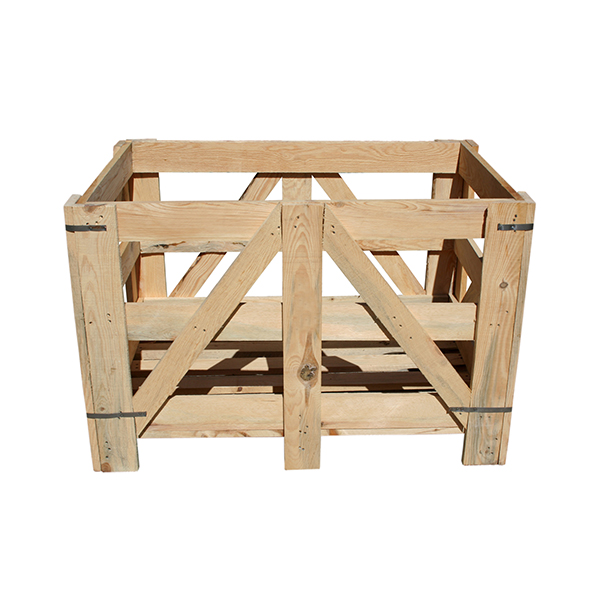 Example of a robust wooden pallet box for industry.
Plastic (HDPE or polypropylene)
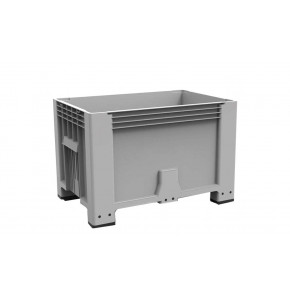
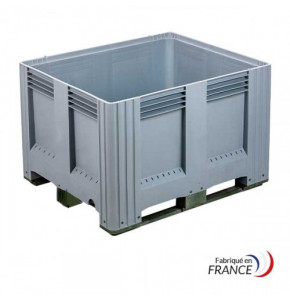
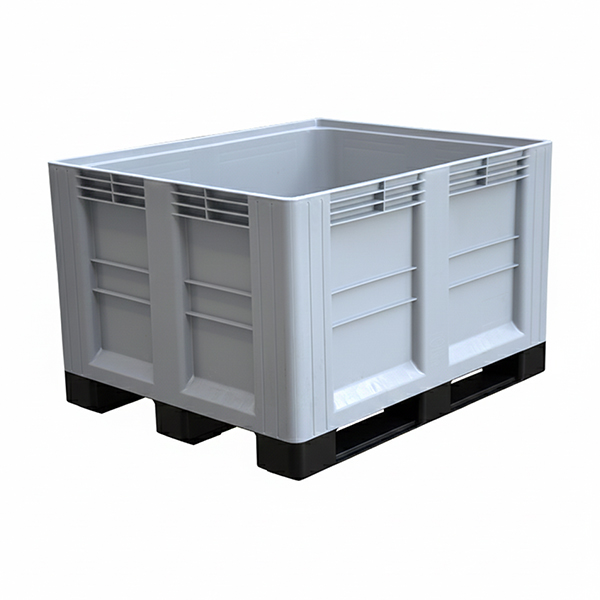
The plastic pallet box has established itself in sectors demanding hygiene and washability. It does not retain moisture, does not rust, resists common chemicals, and can go through industrial washing machines. Some HDPE models resist freezing temperatures, making them the preferred choice for the cold chain. On the other hand, it is more expensive to purchase than wood, and less easily repairable in case of breakage.
Ideal for: food industry, pharmaceuticals, cosmetics, positive and negative cold logistics.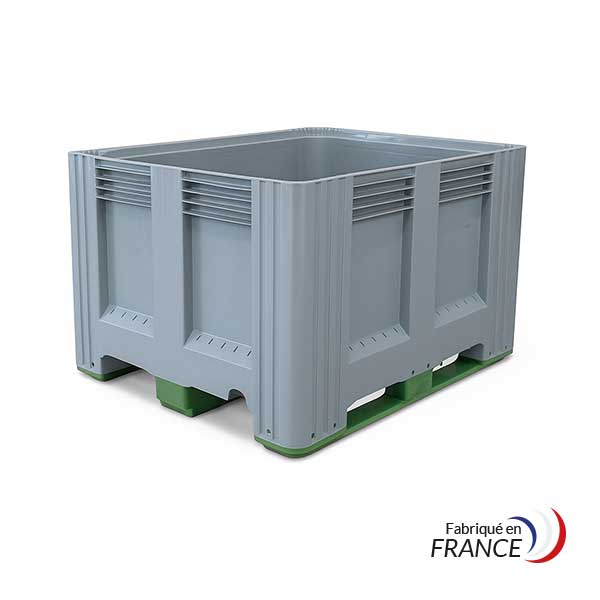 HDPE plastic pallet box, ideal for hygienic environments.
Metal (painted steel or stainless steel)
The metal pallet box offers the highest payload — often over 1,500 kg — and a very long lifespan in industrial environments. Stainless steel is suitable for humid environments or the food sector. Painted steel is more affordable but requires protection against corrosion. Its empty weight (often 50 to 100 kg) is a real drawback for manual handling.
Ideal for: foundry, forging, metallurgy, high-density heavy parts.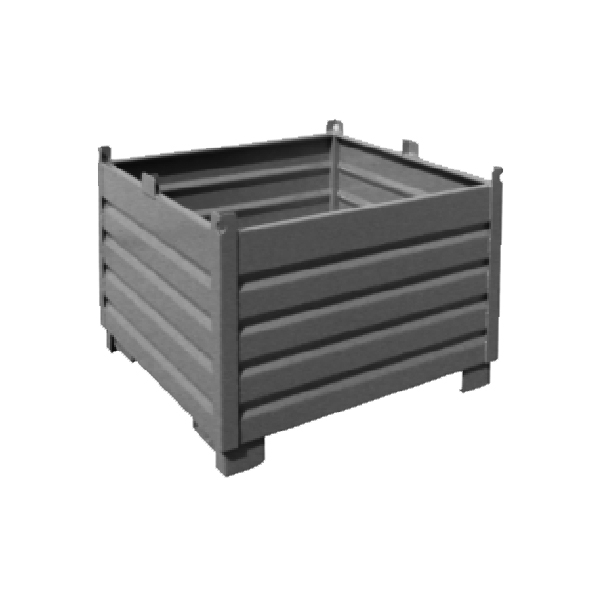 Steel pallet box, designed for extremely heavy loads.
Wire mesh (welded steel)
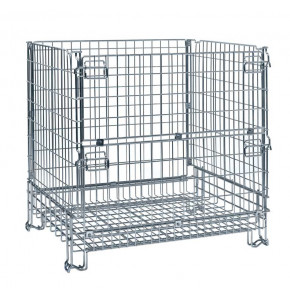
The wire mesh box combines a metal structure with total visibility of the contents. It facilitates visual inventory without opening the box, ensures good ventilation of products (useful for certain plants or damp materials), and allows a barcode or RFID scan to pass through the wall. It is often foldable, making it a popular choice in return logistics.
Ideal for: automotive spare parts, industrial logistics, B2B e-commerce with frequent returns.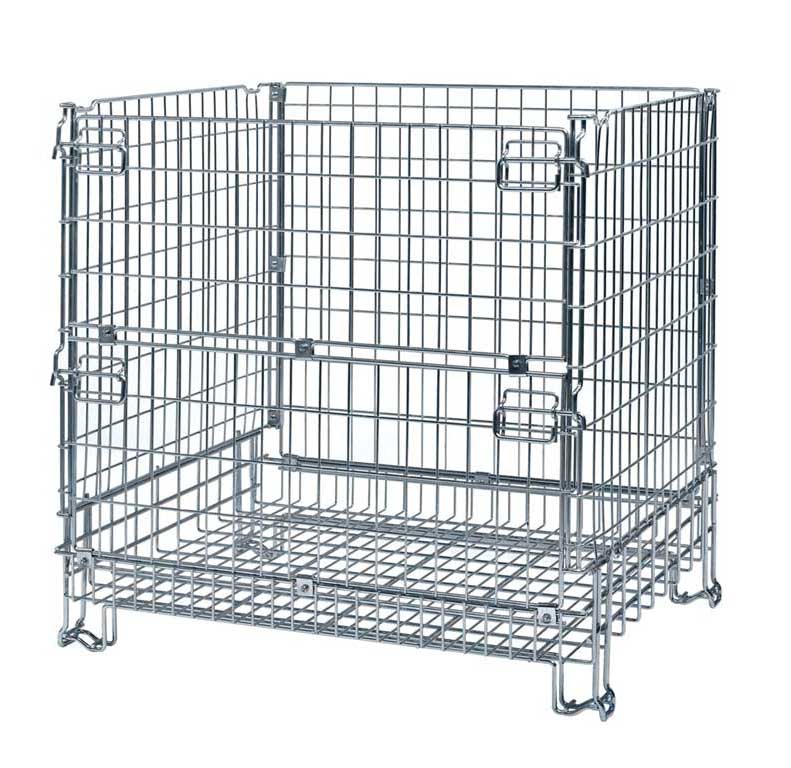 Welded steel wire mesh box, perfect for visual inventory control.
2. Payload: never underestimate the actual weight
Payload is the most frequently misinterpreted technical data. Two concepts must be distinguished:
- Dynamic load: corresponds to the maximum weight the box can support in motion — during transport by forklift or pallet jack. It is generally lower than the static load.
- Static load: corresponds to the maximum weight supported at a standstill, under storage conditions. This is the highest value indicated by the manufacturer.
Common thresholds on the market: 500 kg, 750 kg, 1,000 kg, 1,500 kg and beyond. The most common mistake is choosing a box whose maximum load corresponds exactly to the usual load weight. In practice, you should always allow a safety margin of at least 20%, for two reasons: load variations depending on the batches and the progressive wear of the structure over usage cycles.
Concrete example: You store metal parts with an average weight of 800 kg per box. Opt for a model tested for at least 1,000 kg, ideally 1,200 kg.
3. Dimensions and pallet compatibility
A pallet box only works as a system if it is compatible with your entire supply chain: shelving, forklifts, transport vehicles, loading docks.
Standard formats
The two dominant formats in Europe are:
- 1,200 × 800 mm (EUR or EPAL pallet): the most common format, compatible with the vast majority of shelving and forklift forks.
- 1,200 × 1,000 mm: industrial format, offering a larger usable surface area, favored in certain sectors (chemicals, mass distribution).
Other formats exist (600 × 800 mm, 800 × 600 mm...) for specific uses or constrained production lines.
Internal usable height
The internal height of the box determines what you can store in it. It generally varies from 600 mm to 1,200 mm. For bulk products or short parts, a height of 700-800 mm is sufficient. For long parts or tall cardboard boxes, opt for models measuring 1,000 mm or more, or boxes with removable walls.
Shelving compatibility
If you store your boxes at height on pallet racking, check the depth of the beams and the spacing of the crossbars. A box that is slightly longer than expected can block placement or weaken the beams.
4. Fixed, foldable or nestable: think about empty returns
The choice between a fixed box and a foldable box is often underestimated, even though it has a direct impact on logistics costs.
Fixed box
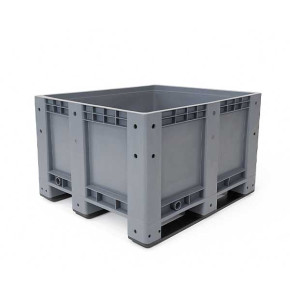
The rigid structure box is the strongest and easiest to use. It requires no handling between uses. It is the right choice if your boxes are used continuously and rarely stored empty. However, an empty fixed box occupies exactly the same volume as a full box: if you have to store or transport a large number of them empty, the lost space becomes a cost center.
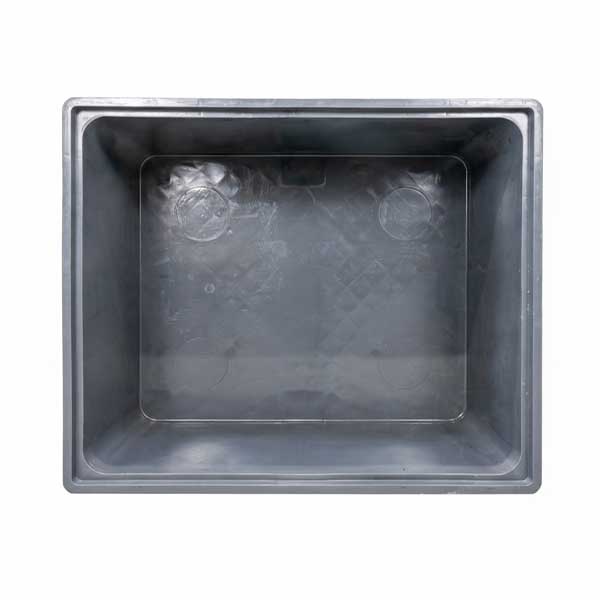 Fixed structure pallet box, the guarantee of maximum robustness.
Foldable box
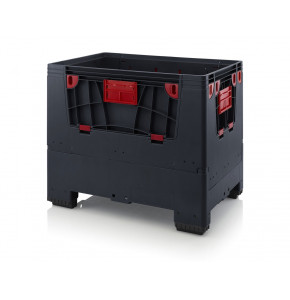
The foldable box folds flat when empty, with a compression ratio generally around 4:1 (four empty boxes take up the space of one full box). This is a decisive advantage for logistics flows with frequent returns (delivery routes, reuse circuits, reverse logistics). Its drawback: the folding hinge is a weak point in case of intensive use or overload.
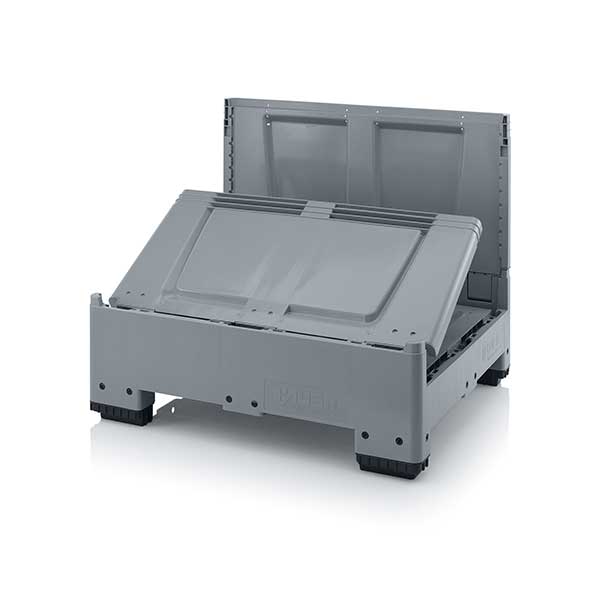 Foldable pallet box, optimized to reduce empty return costs.
Nestable box
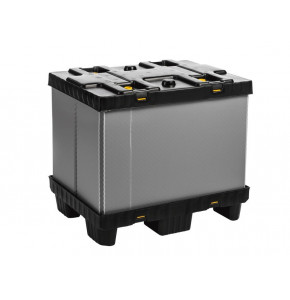
Nestable boxes slide into each other when empty, without a folding system. This is a good compromise for low-volume operations or temporary storage. They are less compact than foldable ones but mechanically simpler.
 Nestable pallet boxes, an excellent compromise between space saving and simplicity.
5. The operating environment: a decisive criterion too often neglected
The same product can last five years or six months depending on the environment in which it is used.
Positive and negative cold
In a positive cold room (0 to +4 °C), most plastics behave well. In negative cold (down to -30 °C), only HDPE or polypropylenes certified for extreme cold guarantee that the box will not become brittle and break under the weight during loading or unloading. Avoid untreated wooden boxes in these conditions (condensation, deformation).
Humid or outdoor environment
Outdoors or in a humid environment (industrial laundry, uncovered warehouse, coastal area), untreated wood is not recommended. Opt for plastic, hot-dip galvanized metal, or stainless steel depending on the load constraints.
Food sector
Boxes in direct or indirect contact with food must comply with the European regulation EC 1935/2004 relating to materials in contact with food. For plastic, require an FDA or CE certificate of conformity. Wire mesh boxes in 304 or 316 stainless steel are also compliant for this type of use.
Chemical or hazardous products
If you store corrosive products, solvents, or hazardous materials, check the chemical compatibility of the material with the products concerned. HDPE plastic resists many dilute acids but can be attacked by certain aromatic solvents. If in doubt, consult the manufacturer's technical data sheet or seek specialized advice.
Summary table — Which material for your use?
| Material | Recommended use | Typical max load | Key advantage |
|---|---|---|---|
| Wood | Construction, mechanics, general transport | 1,000 – 1,500 kg | Economical, repairable |
| HDPE Plastic | Food industry, pharmaceuticals, cold chain | 500 – 1,000 kg | Hygienic, washable, cold resistant |
| Painted steel | Heavy industry, metal parts | 1,000 – 2,000 kg | High load, long lifespan |
| Stainless steel | Food, humid environment, chemicals | 800 – 1,500 kg | Maximum hygiene, corrosion resistance |
| Steel wire mesh | Parts logistics, returns, B2B e-commerce | 500 – 1,000 kg | Content visibility, foldable |
The 3 questions to ask before buying
- What is the actual load of my products? Weigh a typical load and apply a 20% margin to choose your payload threshold.
- In what environment will I use this box? Humidity, cold, food contact, chemicals: each constraint points towards a specific material.
- Do I often store it empty? If your boxes make frequent round trips or remain empty for a long time between uses, a foldable or nestable version will save you significant space and cost.