Francais
 Cart
Cart Quote
QuoteWhich material handling trolley should you choose? The complete guide by industry and usage
Whether in manufacturing, logistics, retail, or healthcare environments, moving loads is a daily operational reality. However, efficient handling is not something that happens by chance. Often perceived as a basic piece of equipment, the material handling trolley actually plays a pivotal role in structuring internal workflows. When selected correctly, it enhances operational flow, minimizes accident risks, and actively contributes to the prevention of Musculoskeletal Disorders (MSDs). Conversely, an ill-suited choice can become a source of discomfort, inefficiency, and premature equipment wear.
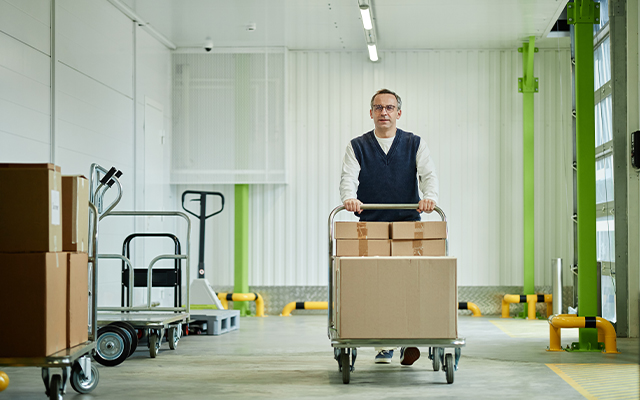
Faced with the diversity of available models — simple platforms, side rails, wire mesh, stainless steel, all-terrain — how do you identify the one that truly corresponds to your activity?
Multiroir offers you insights by sector and usage.
Different constraints depending on the activity sector
Every professional environment imposes its own material handling requirements: load weight, frequency of use, floor type, sanitary constraints, or available space.
Industry and workshops: Priority on durability
In workshops and production sites, trolleys are used to move mechanical parts, feed lines, or transfer sub-assemblies between stations.
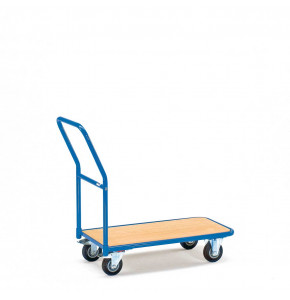
Robustness is decisive here. Reinforced platform trolleys or those with side rails help secure loads during movement.
A mechanically welded chassis ensures better longevity, especially when loads are heavy or handled daily.
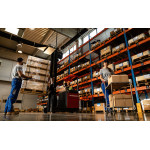
Logistics and warehouses: Efficiency and organization
In logistics environments, speed of execution is essential. The trolley becomes a true tool for flow optimization.
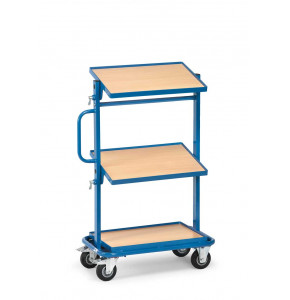
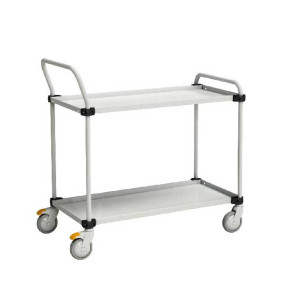
For order preparation (picking), shelf models facilitate the immediate sorting of items.
For transporting bulky cartons or packages, trolleys with side rails secure the merchandise all the way to the shipping area.
Healthcare, catering, and food industry: The hygiene requirement
In hospitals, nursing homes, laboratories, or central kitchens, sanitary constraints are paramount.
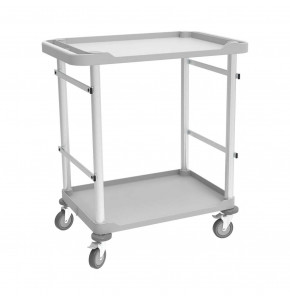
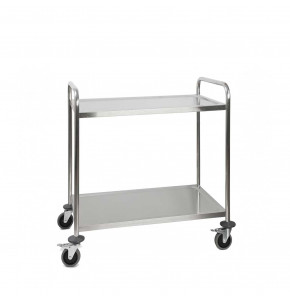
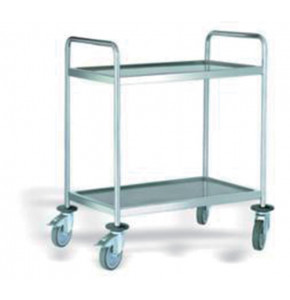
The stainless steel trolley stands out as the reference solution. Corrosion-resistant, compatible with humid environments, and easy to disinfect, it meets the strictest hygiene requirements.
- Laundry trolleys for transporting textiles
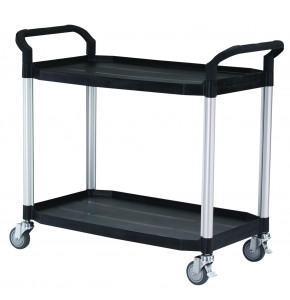
- Tray trolleys
- Models dedicated to meal distribution
Retail and administration: Maneuverability and space saving
In sales areas or offices, circulation often takes place in restricted spaces.
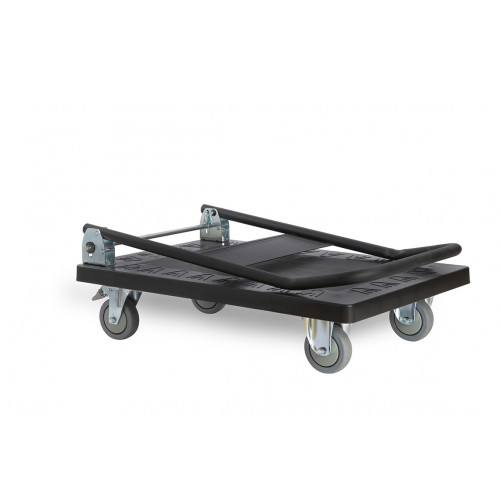
Folding trolleys or those with a fold-down handle constitute a suitable solution. They allow for the transport of merchandise or supplies while remaining easy to store after use.
Construction and outdoor use: Resistance and stability
On construction sites, floors are uneven and loads are often heavy.
Trolleys equipped with pneumatic or puncture-proof wheels facilitate movement on gravel, asphalt, or rough terrain.
This configuration limits shocks and improves stability, even in demanding conditions.
Adapting the trolley to the actual task
Beyond the business sector, it is essential to precisely analyze the usage scenario. Here is a quick comparison to identify the right equipment:
| Overview | Your need / usage | The Multiroir solution |
|---|---|---|
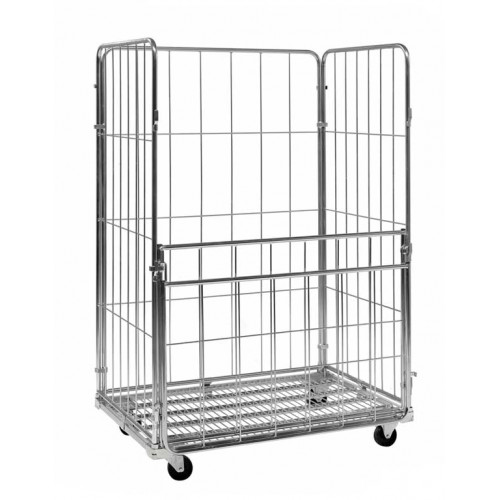
|
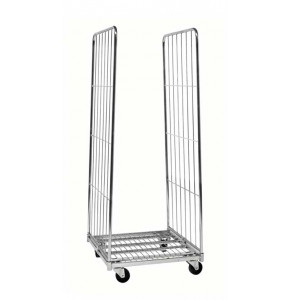
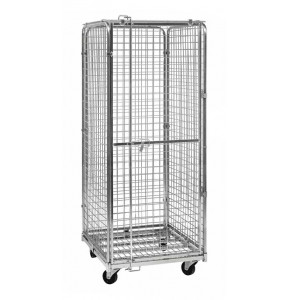
Transporting small loose packages Prevents unstable items from falling. |
The wire mesh trolley
Maximum load security. |
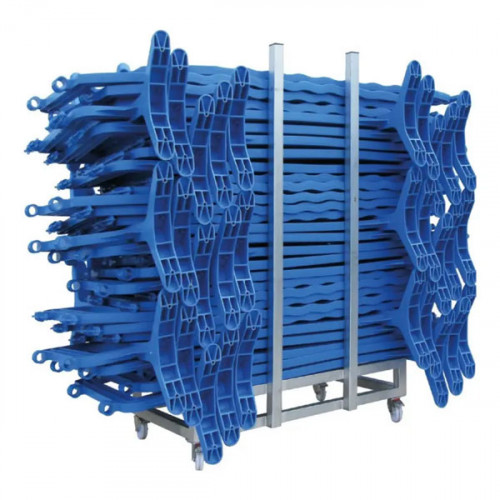
|
Moving long loads Wooden panels, glass, drywall... |
The panel trolley
Vertical support and breakage prevention. |
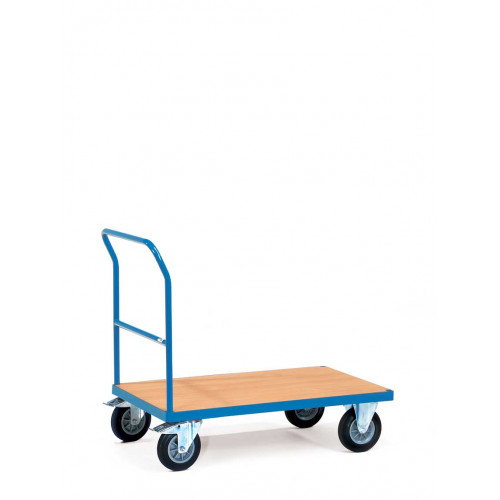
|
Handling extreme weights Machinery, massive equipment (>500kg). |
The "Heavy Duty" trolley
Reinforced welded chassis. |
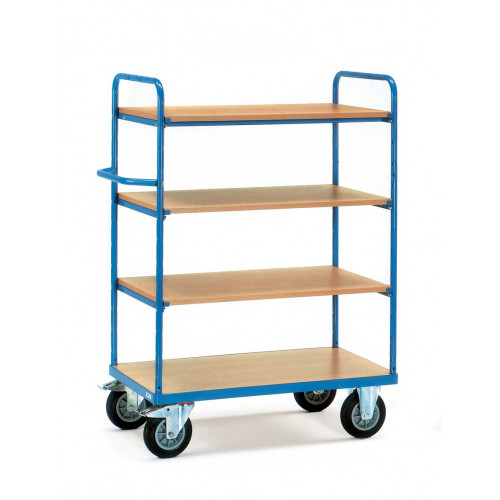
|
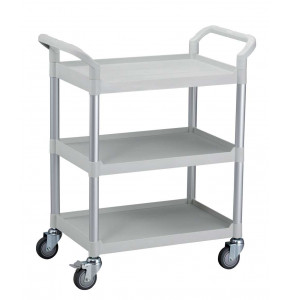
Order preparation (Picking) Sorting and organizing multiple items. |
The shelf trolley
Volume and sorting optimization. |
|
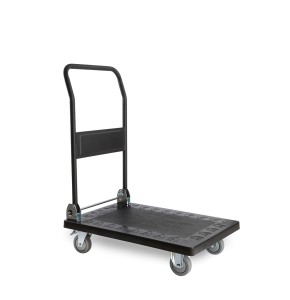
Reduced storage space Occasional use, offices, deliveries. |
The foldable trolley
Compact and easy to store. |
Technical criteria to examine before buying
Wheel quality
Wheels directly influence maneuverability and the pushing effort required.
- On smooth floors: rubber or nylon wheels for fluidity and silence.
- On uneven terrain: pneumatic wheels to absorb shocks.
- In environments exposed to oils or chemicals: polyurethane wheels.
Platform dimensions
The platform must be adapted to the dimensions of the loads but also to circulation constraints.
A model that is too wide can complicate maneuvering in narrow aisles, while a platform that is too small increases the risk of instability.
It is recommended to measure the most restricted passages (doors, hallways, shelving rows) before making your choice.
Load capacity
It is advisable never to use a trolley at its maximum load capacity permanently.
Providing a safety margin of 20 to 30% helps preserve the structure, bearings, and welds, while reducing the effort required for movement.
Ergonomics
The height of the platform and the handle must be adapted to the operators to limit awkward postures.
Ergonomic equipment actively participates in preventing Musculoskeletal Disorders (MSDs) and integrates fully into a QHSE approach.
Choosing a material handling trolley goes beyond simply selecting rolling equipment. It is an investment in operational performance and team safety.
Whether it is a stainless steel model for sensitive environments, a wire mesh trolley for logistics, or a reinforced version for industry, each configuration meets specific constraints.
Multiroir supports professionals in analyzing their needs to offer solutions that are adapted, durable, and consistent with their business requirements.