Francais
 Cart
Cart Quote
QuoteComprehensive guide to stainless steel in industrial and Food-Grade environments: Grades 201, 304, and 316
Stainless steel is the premier material for demanding environments. Whether in a professional kitchen, a pharmaceutical laboratory, or an industrial workshop, it guarantees hygiene, durability, and resilience. However, not all stainless steels are created equal. Choosing between grade 201, 304, and 316 is crucial for the profitability and safety of your facilities. Which stainless steel should you choose for your business?
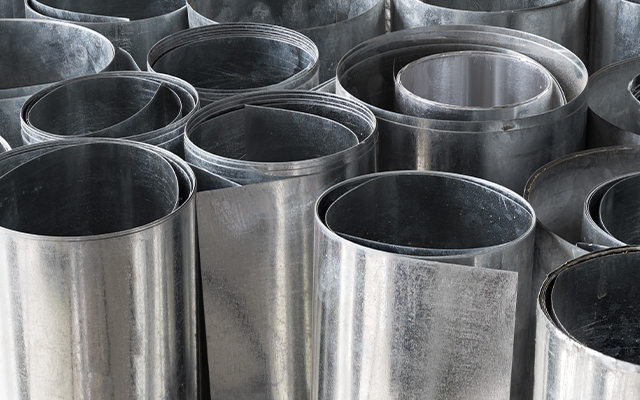
What is food-grade stainless steel?
The term "food-grade stainless steel" refers to stainless steel designed for direct contact with food without the risk of toxic particle migration (such as heavy metals) into the food. To comply with European (EN) and international standards, this alloy must be:
- Chemically inert: It does not react with acidic or fatty foods, thereby preserving their taste and quality.
- Hygienic: Its smooth, non-porous surface prevents bacterial accumulation and facilitates cleaning (HACCP compatible).
- Corrosion resistant: It withstands humidity and frequent washing.
The secret of stainless steel? Passivation. On contact with oxygen, the chromium contained in the alloy forms a thin, invisible protective layer that naturally regenerates in case of scratches, preventing rust from setting in.
The 3 star grades of the industry: 201, 304, and 316
In the Multiroir catalog and on the professional equipment market (tables, trolleys, bins), you will primarily find three families.
Stainless Steel 201: The economical alternative
Stainless steel 201 is an austenitic steel where part of the nickel is replaced by manganese and nitrogen.
- Its strengths: Its cost is significantly lower. It offers very good mechanical resistance (hardness) and a shiny visual appearance similar to 304.
- Its limits: Its corrosion resistance is moderate. It can pit if exposed to high stagnant humidity or aggressive chemicals.
- Recommended use: Ideal for dry furniture, storage shelves in dry reserves, or indoor environments with little exposure. It is the "value for money" choice for tight budgets.
Stainless Steel 304 (AISI 304): The versatile standard
This is the global standard for professional kitchens and the food industry. Composed of 18% chromium and 10% nickel (often called 18/10), it is non-magnetic.
- Its strengths: Excellent corrosion resistance, perfect food neutrality, easy to weld and form.
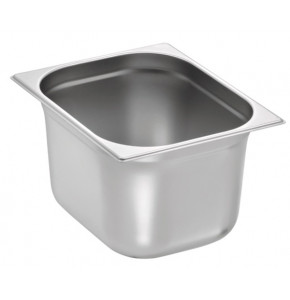
- Recommended use: Preparation tables, sinks, gastronorm pans, kitchen utensils. It is suitable for 90% of standard professional uses.
Stainless Steel 316 (or Marine Grade): For extreme environments
Stainless steel 316 contains molybdenum (2 to 3%), a magic element that makes it extremely resistant to chlorides and acids.
- Its strengths: Almost indestructible by rust, even in saline or chlorinated environments.
- Recommended use: Pharmaceutical laboratories, chemical industries, kitchens using very powerful detergents, or seaside installations.
Comparison Table: Making the right choice
Here is a technical summary to help you select your Multiroir furniture:
| Feature | SS 201 (Eco) | SS 304 (Standard) | SS 316 (Premium) |
|---|---|---|---|
| Key Composition | Chromium, Manganese, Low Nickel | Chromium (18%), Nickel (8-10%) | Chromium, Nickel, Molybdenum |
| Corrosion Resistance | ⭐⭐ Moderate (Dry area) | ⭐⭐⭐⭐ Excellent | ⭐⭐⭐⭐⭐ Superior (Saline/Chlorine area) |
| Cost | € (Economical) | €€ (Intermediate) | €€€ (High) |
| Magnetic? | Slightly (after cold working) | No (generally) | No |
| Best Use | Dry storage, service trolleys, office furniture | Pro kitchens, food processing, hospitals | Chemistry, marine, swimming pools, pharma |
Expert maintenance tips
Even the best stainless steel (316) can be damaged if poorly maintained. To ensure the longevity of your Multiroir bins and trolleys:
- Ban bleach: Chlorinated products attack the stainless steel passivation layer and cause rust pitting, even on 304.
- Daily cleaning: Use hot water and a mild detergent (professional dish soap).
- No abrasives: Avoid classic steel wool which leaves ferrous deposits (which will then rust). Prefer soft or synthetic sponges.
- Rinse and dry: Stagnant water, especially if hard (limescale), can leave dull marks over time.
Which equipment for your company?
Choosing your stainless steel is a strategic investment.
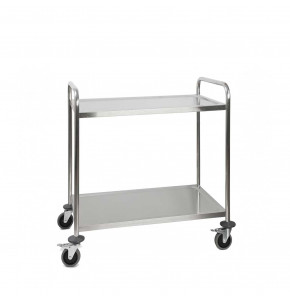
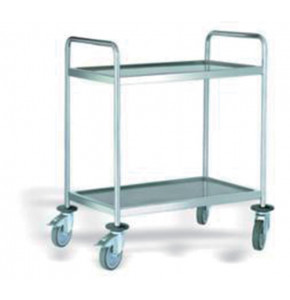
If your priority is budget for store room fitting or dining room transport, our Stainless Steel 201 ranges (eco tables, service trolleys) will be perfect.
For your food preparation or washing areas, or to meet strict hygiene standards, choose our Stainless Steel 304 solutions without hesitation.
Equip yourself with Multiroir
Discover our complete selection adapted for professionals:
Need technical advice? Our experts are at your disposal to choose the alloy best suited to your environment.